
The Reserve Bank on Tuesday asked banks not to levy penalties on customers who don't maintain a minimum balance in any inoperative account as part of a consumer protection initiative.

The broader markets declined with mid-caps and small-caps falling nearly 0.3% on the BSE.

All that you must know about the pros and cons of gift deeds, tax implications, essentials, documents required, conditions, etc...
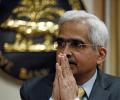
RBI Governor Shaktikanta Das on Tuesday asked private sector banks to ensure continuity in the provision of various financial services, including credit facilities to individuals and businesses, in the face of challenges brought on by the pandemic. Earlier this month, the governor had held a similar meeting with MD and CEOs of public sector banks. During the meeting with the MD and CEOs of select private sector banks, Das also impressed upon the banks to quickly and swiftly implement the measures announced by the RBI on May 5, 2021, in right earnest.

Commemorating 75 years of India's independence, SBI has launched a 75-day Utsav Deposit Scheme, offering 6.10 per cent for fixed deposits. Senior citizens will get an additional 0.50 per cent and the offer is on until October 30, SBI said.

The RBI kept interest rates unchanged at 8 per cent as widely expected.

It would be a good idea to create independent oversight committees for each regulatory institution and indeed, even for their appellate bodies, says A K Bhattacharya.
The Reserve Bank of India's dilemma over rates is its alone.
The Reserve Bank of India said on Tuesday it would accord highest priority to contain inflation within 5 to 5.5 per cent, while keeping its projection for economic growth during 2006-07 unchanged at 7.5 to 8 per cent.
Headed by Urjit Patel, MPC for the fourth straight time kept the repo rate unchanged, at which it lends to the banks, at 6.25 per cent. The reverse repo, at which RBI borrows, will be 6 per cent.

Foreign investors have pulled over Rs 6,400 crore from the Indian equity market in the first four trading sessions of the ongoing month when the Reserve Bank of India (RBI) and US Federal Reserve raised interest rates. Given the headwinds in terms of elevated crude prices, inflation, tight monetary policy among others, FPIs' flows in India are expected to remain volatile in the near term, Shrikant Chouhan, Head - Equity Research (Retail), Kotak Securities, said. Foreign Portfolio Investors (FPIs) remained net sellers for seven months to April 2022, withdrawing a massive amount of over Rs 1.65 lakh crore from equities. This was largely on the back of anticipation of a rate hike by the US Federal Reserve and due to the deteriorating geopolitical environment following Russia's invasion of Ukraine.

The wholesale price-based inflation eased to 10.66 per cent in September, helped by moderating food prices even as crude petroleum witnessed a spike. WPI inflation remained in double-digit for the sixth consecutive month. In August, it was 11.39 per cent. In September 2020, inflation was 1.32 per cent. "The high rate of inflation in September 2021 is primarily due to rise in prices of mineral oils, basic metals, non-food articles, food products, crude petroleum & natural gas, chemicals and chemical products etc. as compared the corresponding month of the previous year," the commerce and industry ministry said in a statement.

With the stock markets scaling new heights, Finance Minister P Chidambaram on Friday sounded a note of caution and asked investors to guard against excessive exuberance.

There is a narrow chance that the central bank may cut rates in the future, according to a poll of 15 economists and treasurers.

The wholesale price-based inflation in February rose to 13.11 per cent on hardening of prices of crude oil and non-food items, even though food articles softened. After two months of mild easing, WPI inflation accelerated in February and remained in double digits for the 11th consecutive month, beginning April 2021. WPI inflation last month was 12.96 per cent, while in February last year, it was 4.83 per cent. The rise in crude oil and natural gas prices after the Russian invasion of Ukraine, beginning February 24, has put pressure on the wholesale price index, even though food articles saw softening across categories of vegetables to pulses to protein-rich items.

Shaktikanta Das is a master of the finest balancing act who listens to all but takes his own decisions, discovers Tamal Bandyopadhyay.

Reversal in the declining economic growth trajectory is clearly the need of the hour and all steps should be taken to bring about this change.

S&P is the only of the three major credit agencies with a 'negative' outlook on India.
Defuses worries on global currency war.

RBI has asked banks to 'allow self-certification; accept a certified copy of the document by mail/post' for account opening.

Fed is still concerned about weak export growth.

The statement indicated that RBI might further increase policy rates to tame inflation, which was still at an uncomfortably high level.

These are the highlights of RBI Governor Shaktikanta Das's statement and resolution of the Monetary Policy Committee (MPC):
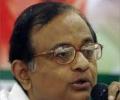
The Reserve Bank of India, in its Second Bi-Monthly Monetary Policy Statement for 2014-15, kept the key interest rate unchanged at 8 per cent.

The repo rate could be reduced by 50 bps in the current year.

The decisive election victory for the Narendra Modi-led National Democratic Alliance has created a conducive environment for policy actions and should help in economic recovery, Reserve Bank of India Governor Raghuram Rajan said on Tuesday.

However, WPI inflation remained in double digit for the third consecutive month in July, mainly due to a low base of last year. WPI inflation was (-) 0.25 per cent, in July 2020. "The high rate of inflation in July 2021 is primarily due to low base effect and rise in prices of crude petroleum and natural gas; mineral oils; manufactured products like basic metals; food products; textiles; chemicals and chemical products etc as compared the corresponding month of the previous year," the commerce and industry ministry said in a statement.

The task force will look at emerging markets, technology, regulatory and monetary policies, loss of trust in financial services, and financial inclusion.

Indian rupee is likely to test 76-76.50 levels as a relatively strong greenback, boiling crude prices and COVID headwinds deepen the depreciation bias for the domestic currency, according to experts. One of the significantly-hit Asian currency in recent months amid uncertain economic times, rupee is expected to see a consolidation in the vicinity of the current level before being pulled towards the depreciation bias. While the equity market has been surging with occasional blips, the rupee has mostly been weak against the US dollar in recent months.

Equity markets rallied after softer-than-expected inflation data in the US and UK rekindled hopes of the end of the rate-hiking cycle by major central banks. The soft inflation reading drove down bond yields and the US dollar, whetting the appetite for risky assets. The 10-year US bond yield fell below 4.5 per cent after topping 5 per cent less than a month ago.

India says it gives equal treatment to foreign companies on tax matters, not special consideration.

Snapping the two-month easing trend, WPI inflation rose in August and remained in double-digit for the fifth consecutive month. In July 2021, WPI inflation stood at 11.16 per cent. In August 2020, WPI inflation was at 0.41 per cent. "The high rate of inflation in August 2021 is primarily due to rise in prices of non-food articles, mineral oils; crude petroleum and natural gas; manufactured products like basic metals; food products; textiles; chemicals and chemical products etc as compared the corresponding month of the previous year," the commerce and industry ministry said in a statement.

A freebie once granted can hardly be discontinued. All that can happen is to substitute it with a bigger freebie, notes A K Bhattacharya.

He will be the eighth Deputy Governor to be made Governor at RBI

The Indian equity market is likely to remain under pressure and rangebound over the next few months. This comes as global central banks, led by the US Federal Reserve look at a possibility of hiking rates aggressively to tame inflation. Back home, the Reserve Bank of India, too, remains data dependent in its endeavour to keep inflation in check and pursue an aggressive monetary policy stance.

Asserting that retail inflation excluding food and fuel is still at an elevated level, the Reserve Bank of India on Tuesday said it would endeavour to curb price increases.
Bankers and the markets on Monday read signals that the Reserve Bank of India was likely to continue its tight money policy in Governor YV Reddy's statement that India is vulnerable to oil and foodgrain price shocks.

In a bid to check fraud, the Reserve Bank on Friday decided to permit all banks to introduce card-less cash withdrawal through ATMs.

"He (RBI governor Duvvuri Subbarao) has explained the position. I think the governor's statement is very balanced, very appropriate as far as I could understand," Reddy said.

The RBI must first deal with the adverse turn of events in the CPI.
